

A fair number of calls start with a brand name. "Do you do CHI doors?" "Can you get Raynor parts?" "It is an Amarr, is that a problem?" People have found the label, looked the manufacturer up, and assumed that fixing the door means sourcing parts from the company that made it, like a car that only takes its own filters.
For most repairs, the brand on the door makes no difference at all. For a few, it is the whole question. Knowing which is which saves a surprising amount of searching.
Most of a garage door is standard hardware
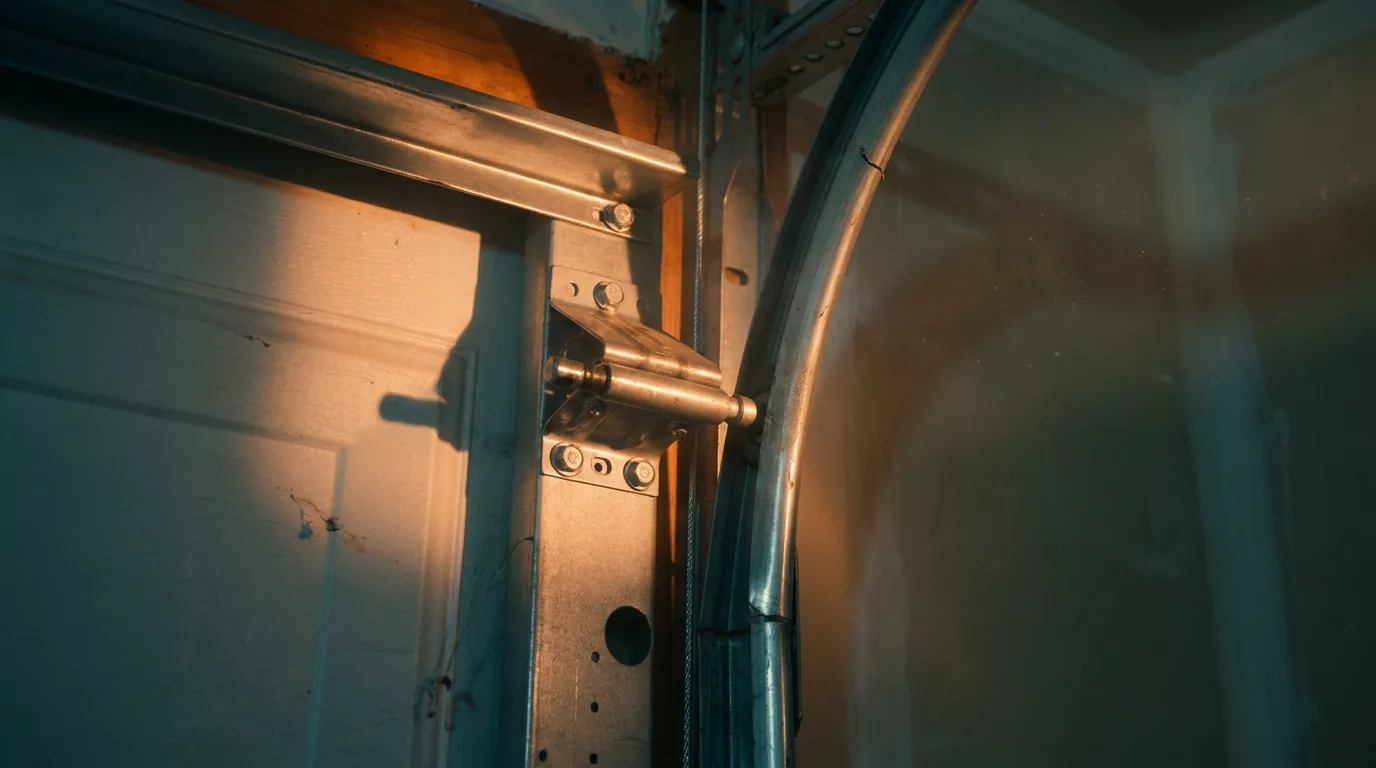
The parts that fail most often on a sectional door are not specific to the company that built it. A torsion spring is defined by its wire size, inside diameter, length and wind, not by the name on the panel. Rollers come in standard stem lengths and wheel sizes. Hinges are numbered by their position on the door, so a number two hinge is a number two hinge whoever made the sections. Cables are sized by diameter and length, and drums by the height of door they are made for.
That standardisation is the reason a technician can fix a door they have never seen on the first visit. The truck carries springs, rollers, hinges, cables, drums and bearings that fit the great majority of residential doors, regardless of whose label is on the inside.
What the truck carries, and what it cannot
The line between the two is fairly clean, and it is worth knowing before you spend an evening on a parts search:
- Carried, for nearly any door: springs, cables, drums, rollers, hinges, bearings, bottom seal, and most opener parts for the common makes.
- Ordered, but not brand-specific: unusual spring sizes, high-lift hardware, heavy-door cables.
- Brand-specific, from the manufacturer: door sections, matching window inserts and decorative trim.
- Brand-specific and occasionally awkward: proprietary spring systems, which have their own section below.
Only the last two ever need the label. Everything above them needs a tape measure.
Where to find the label, and what else to note
The door's manufacturer usually labels it on the inside, on the edge of a section or on the top panel, sometimes alongside a spring warning tag. The opener is a different machine from a different company, and it carries its own label on the motor head. Before calling anyone about either, these are worth writing down:
- The door's make and model, and its width and height.
- How many sections it has, and whether any have windows.
- Whether it has torsion springs on a shaft above the door, extension springs along the tracks, or springs you cannot see at all.
- The opener's make and model, from the motor head.
- Whether the opener has a battery backup.
- Roughly when the door went in, if anyone knows.
Three minutes with a torch, and the call gets much shorter. A photograph of each label does the same job and is harder to lose.
The panels are where the brand matters
A section of a garage door is a manufactured product with a particular profile, a particular embossed pattern, a particular thickness and a colour that has been in the sun for however many years. If a bumper creases the bottom section, the replacement has to come from the same manufacturer, in the same design, in the same size, or it will not line up with its neighbours.
That is the one repair where the label is essential, and where age starts to count as well. Manufacturers change their ranges. A section for a door made ten years ago may still exist. One for a design discontinued long ago may not, and then a single damaged panel becomes a conversation about the whole door. Having the model to hand is the difference between a quick answer and a long hunt.
The few systems that really are proprietary
Some manufacturers have built counterbalance systems of their own that do not follow the standard pattern. The best known is Wayne Dalton's TorqueMaster, where the springs sit sealed inside the shaft above the door rather than on it, so you cannot see them and they cannot be wound the ordinary way. Doors like that need either the manufacturer's parts or a conversion to a standard torsion system, and it is useful to know which you have before somebody arrives with the wrong springs.
If you look above your door and cannot find a spring anywhere, that is usually the explanation, and it is worth mentioning on the phone.
Why the parts search is often the wrong search
Plenty of people looking for parts are planning to fit them, and for most of the list that is fine. Rollers, hinges, a bottom seal and an opener battery are within reach of anyone careful with a ladder. Springs are not, and neither are the bottom brackets the cables attach to, which carry the spring's full load whenever the door is down. Buying the right spring is easy. Fitting it is the part that hurts people.
When we will send you to the manufacturer's dealer instead
If your door is new enough to be under the manufacturer's warranty, or the job is a matching replacement section, the dealer for that brand is sometimes the quicker and cheaper route, and we will say so. Their parts channel is their own, their warranty is their own, and there is no reason for you to pay somebody to stand in the middle of it.
For everything else, springs, cables, rollers, openers, off-track doors, the name on the label is a detail, not a barrier.
The brand matters for the panels, and almost nothing else
Read the label, note the model, and keep it somewhere you will find it. It matters the day a section is damaged, the day a warranty claim is needed, and on the rare door with a proprietary spring system. The rest of the time it is trivia.
Which means the honest answer to "do you do CHI doors" is yes, and so does nearly everybody else. We would rather you knew that than thought you had to find us specifically.
Garage Door Doctor’Z · (833) 991-3899 · doctorzgaragedoor.com
CSLB C61/D28 · Lic. 1138150 · Serving the Sacramento Valley since 2018.