

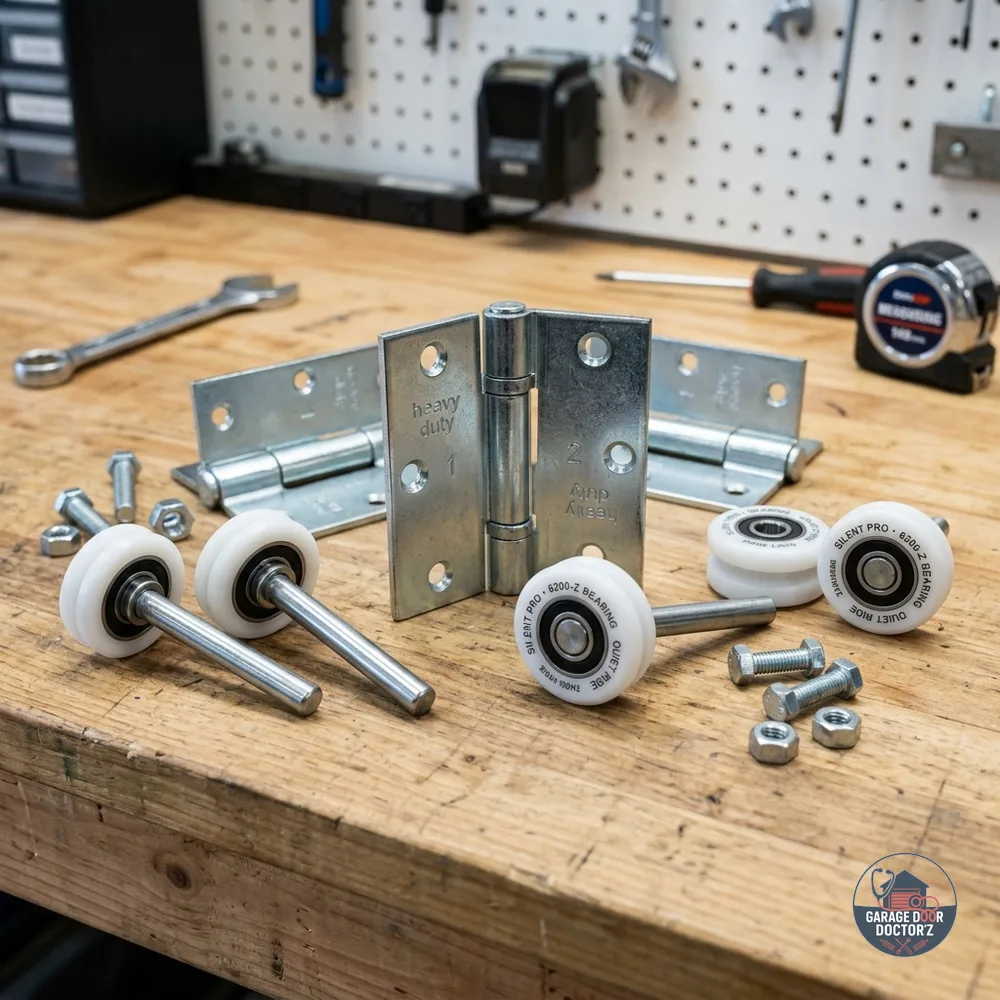
"A screeching, rattling, or grinding garage door is more than just an annoyance; it is a cry for mechanical help. Friction is the silent killer of garage doors, placing heavy drag on the motor and wearing down steel parts. Fortunately, most noisy operation can be solved at home with a few simple maintenance steps. Learn how to quiet your door and keep it running smoothly."
1. Tighten Loose Structural Hardware
A residential garage door vibrates heavily during travel. Over hundreds of cycles, this vibration backs out nuts and bolts on the tracks, hinges, and opener brackets. Use a standard 7/16-inch wrench or socket to gently tighten all hardware. Be careful not to over-tighten, which can strip the thin sheet metal threads, but make sure all bracket plates are held securely.
2. Deep Clean the Track Channels
Homeowners often make the mistake of spraying thick grease directly inside the vertical and horizontal steel track channels. Grease does not lubricate tracks; instead, it acts as a magnet for sawdust, insect nests, and road grit, building up into a thick black grinding paste. Clean the inside of your tracks using a clean rag and WD-40 or a degreaser to remove all debris, leaving the running surface clean and dry.
⚠️ The Lubricant Choice: Silicone vs. WD-40
Never use standard WD-40 as a permanent lubricant! WD-40 is a solvent/degreaser that evaporates quickly, leaving metal dry. Instead, purchase a specialized silicone-based or lithium-based garage door spray. This leaves a slick, durable, water-resistant film.
3. Lubricate All Moving Parts Properly
Twice a year, apply your specialized garage door lubricant to these key metal-on-metal components:
- Hinges: Spray the pivot points on all steel hinges connecting your panels.
- Rollers: Spray the ball bearings inside each roller wheel center stem (do not spray the outside nylon tires).
- Springs: Lightly spray the entire length of your torsion spring coil to reduce coil-on-coil friction and rust.
- Bearing Plates: Spray the outer bearing hubs located on the far left and right ends of your torsion shaft.
4. Inspect for Seized or Worn Rollers
Examine the rollers while the door is moving. If the roller wheel is sliding along the track rather than rolling, its bearings are completely seized. This creates metal-on-metal screeching and shaves off steel shavings. Upgrading to 13-ball double-sealed nylon rollers is the ultimate way to quiet your door, running whisper-quietly and lasting up to 100,000 cycles.